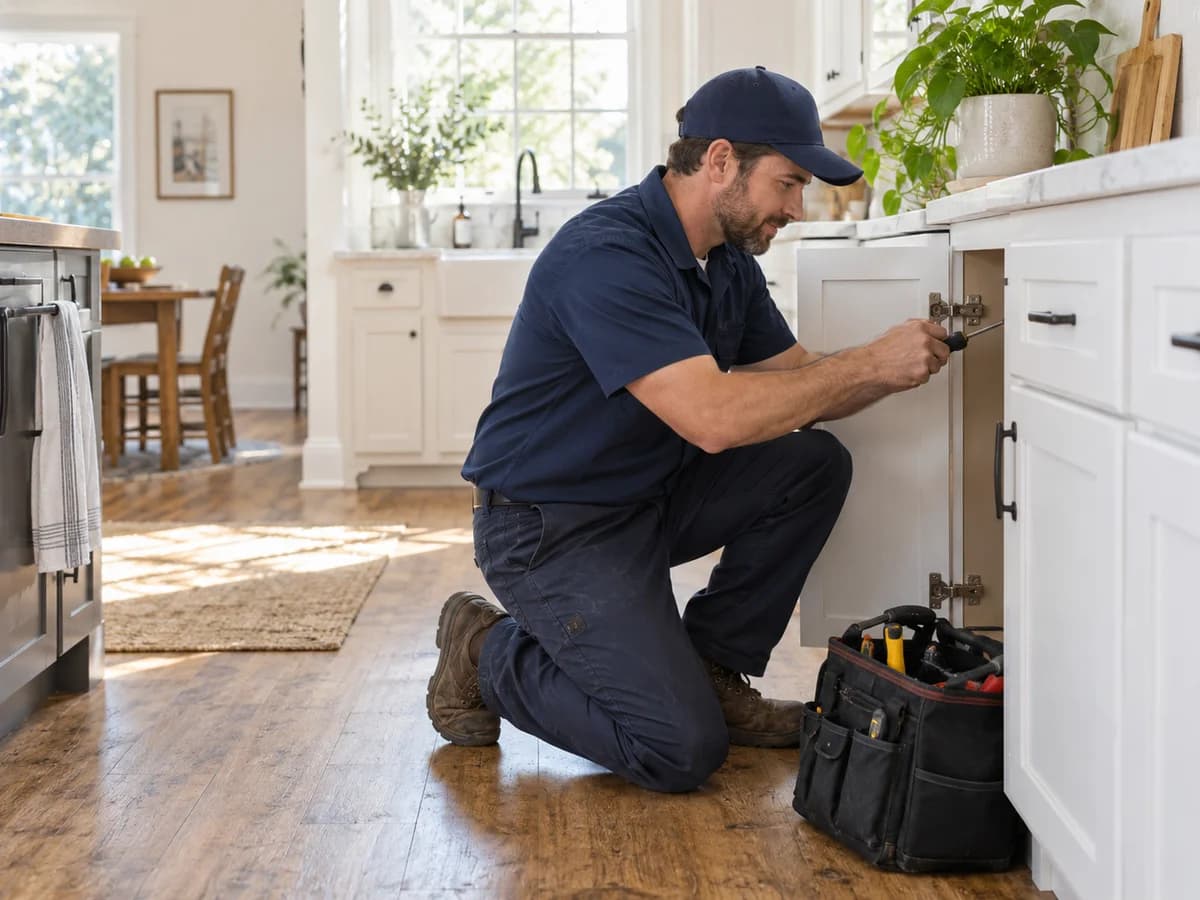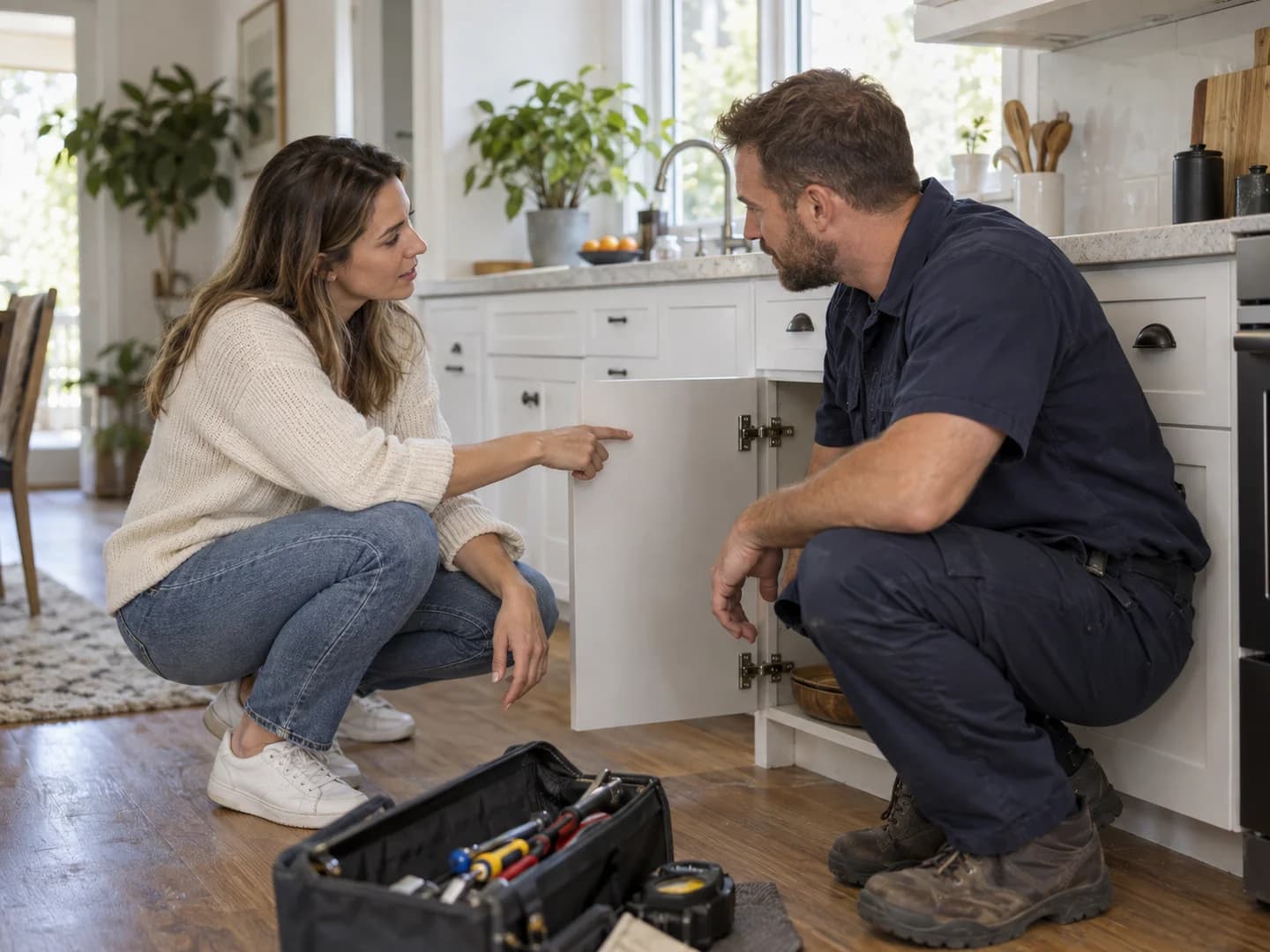
1. Check doors, windows, and drafts
Open and close the doors and windows you use daily. Note sticking hardware, loose handles, damaged seals, and a visible gap under an exterior door. Photograph each issue and record which room or entrance it affects. The Department of Energy identifies sealing air leaks around windows and doors as a home energy improvement.
Weatherstripping and door sweeps
Look for missing or worn material and share close-up photos. Ask the pro to identify a suitable replacement and confirm the door will still operate properly.
Window and screen condition
List broken latches, damaged screens, and windows that will not close fully. Tell the pro if you have matching parts or manufacturer information.
A recurring water stain
Include when the stain appears and whether it changes after rain. A cosmetic patch should not replace assessing the source of moisture.
Read the source: Department of Energy Consumer Guide to Air Sealing the Home (PDF).
2. Walk the outside and plan for freezing weather
From the ground, note visible debris at downspouts, water collecting near the building, loose gate hardware, and damage around steps. Photograph the location and describe access. Roof and elevated gutter work are separate from a ground-level repair list; identify the task and the access involved when seeking help.
Outdoor water connections
Locate hose connections and review the winterization instructions for your plumbing setup. If a valve is unfamiliar, leaking, or difficult to operate, ask a qualified pro to assess it rather than guessing.
Paths, gates, and handrails
Check for a loose latch, uneven step, or wobbly rail. Prioritize defects that affect everyday access and show both the close-up problem and the whole area.
Yard debris and storage
List leaves, loose outdoor items, and debris that need handling. Specify disposal expectations, gate width, and where equipment can be carried or stored.
Read the source: National Weather Service Chicago winter preparedness resources.
3. Give heating and alarms their own check
ENERGY STAR recommends a pre-season heating check in fall. Schedule furnace or boiler service with a qualified heating specialist, and follow the equipment instructions for filter care. Keep this separate from a general handyman job unless the provider has the qualifications and scope for that work.
Read the source: ENERGY STAR heating and cooling maintenance checklist.
4. Test smoke and carbon monoxide alarms
Check your alarms using their manufacturer instructions and review their replacement dates. CPSC recommends monthly smoke and carbon monoxide alarm testing. If an alarm is missing, damaged, or hardwired and needs repair, describe the specific equipment and discuss the installation qualifications required.
Read the source: CPSC smoke and carbon monoxide alarm guidance.
5. Turn the walkthrough into a workable project
Use the forecast and the conditions at your property when scheduling. This is a planning checklist for Chicago-area homes, rather than a promise that every item is needed at every home or that a pro is available on a particular date.
Separate the must-do items
Put access problems, active leaks, and weather-sensitive repairs ahead of cosmetic changes. Describe what you observed rather than diagnosing the cause.
Match the work to the right scope
Group compatible small repairs. Keep heating service, electrical work, roofing, and other specialist tasks separate so credentials and expectations can be checked.
Prepare for your building
For a condo or apartment, check building approval and access arrangements where relevant. Share work-hour restrictions, common-area rules, and who can authorize the work.